
Understanding Colonoscopy: Preparation, Procedure and Recovery (Part 1)
Discover everything you need to know about colonoscopy procedures, including preparation tips, what to expect during the exam, recovery guidelines, and when you should schedule your screening.

Introduction
Colon cancer is one of the leading causes of death among people under 50 in the USA! But the relieving news is that colonoscopy screening has reduced colorectal cancer deaths by more than 50% over the past two decades. This just proves how important preventive screening can be.
There is another fact — I have seen 70% of patients deny getting a colonoscopy done because they are uncomfortable, anxious, or simple because they lack understanding of its importance.
I get it. The thought of undergoing a colonoscopy can feel intimidating, but having a good understanding of the process can make a big difference. Whether your doctor recently recommended this screening or you’re simply being proactive about your health, you’ve come to the right place.
In this comprehensive guide, we’ll walk through everything from preparation to recovery, answer your burning questions, and help you feel confident about this essential health screening.
What Is a Colonoscopy and Why Do You Need One?
A colonoscopy is a procedure to examine the large intestine (colon) and the distal part of the small intestine. This procedure uses a camera attached to a flexible tube (endoscope), this tube is passed through the anus and rectum into your colon, which sends pictures of the inside of your colon.
Colonoscopy is used for preventive, diagnostic, or therapeutic purposes. It is ordered as part of your routine health screening for preventive reasons when you are statistically at increased risk for colorectal cancer. It’s also used for diagnosing digestive issues and detecting small growths on the wall of the intestine (called polyps) that can progress to colon cancer if not removed.
Guidelines for routine colon cancer screening:
Age > 45 years old
Last colonoscopy >10 years ago
Tissue removed during previous colonoscopy
Family history of colorectal cancer
Inherited disease like familial adenomatous polyposis (FAP) or Lynch syndrome
Inflammatory bowel disease - Crohn’s disease or ulcerative colitis
Diagnostic colonoscopy indications:
Unexplained rectal bleeding
Unexplained changes in bowel habits - diarrhea, constipation, or incontinence
Unexplained persistent abdominal pain
Unexplained weight loss
Therapeutic uses of colonoscopy:
Remove polyps
Seal wounds
Inject medications
Remove blockages
Place stents
Treat with laser therapy
Colonoscopy has many uses, but most people get their first one as part of routine colorectal cancer screening. While there are several other screening tests available, colonoscopy is considered the gold standard.
Other colorectal cancer screening methods available:
FIT test
Sigmoidoscopy
CT colonography
Colorectal cancer has a survival rate as high as 90% if detected early!!! Yet 1 in 3 people are not getting screened, often because they feel uncertain, uncomfortable, embarrassed, and/or anxious.
Understanding Colonoscopy Preparation: Your Step-by-Step Guide
A critical component for a successful colonoscopy is adequate bowel preparation, which means your colon should be clean with no fecal matter present. If present, it can hide lesions/ growths, giving inaccurate results.
Statistics show that screening colonoscopy provides less reduction of colon cancer risk in the ascending colon (the beginning of your large intestine) compared to the descending colon and rectum. This may be partly due to flat lesions — that are more common in the ascending colon — going unnoticed due to suboptimal bowel preparation.
So how can you achieve the optimal bowel preparation?
7 days before your colonoscopy:
Read the preparation instructions given by your doctor during the consultation when you scheduled the appointment for your colonoscopy.
Ensure you have all the medications/ laxatives you need.
Start eating low-fiber diet, as fiber can stick in your colon.
If you have any questions about the instructions, contact the doctor/ clinic to clear your doubts.
3 days before your colonoscopy:
Stop taking any fiber supplements or anti-diarrheal medications.
Other medications related to your chronic conditions like diabetes, heart conditions, or stroke should be taken/ stopped as directed by your doctor during the day they provided instructions for the procedure preparation.
Strictly consume a low-fiber diet until the procedure.
1 day before your colonoscopy:
Drink only clear liquids or certain light-colored drinks (not red, orange, or purple).
Do not eat any solid foods.
Drink the laxative drink prescribed by your doctor as you have been directed.
The day of your colonoscopy:
Drink the rest of the laxative at least 4-5 hours before you leave home - calculate and prepare the time you need to wake up to finish the laxative at the right time.
Do not drink any beverages for at least 2 hours before your scheduled appointment for the procedure.
List of drinks you can take:
Water
Tea and black coffee without any milk, cream, or lightener
Flavored water without red or purple dye
Clear, light-colored juices such as apple, white grape, lemonade without pulp, and white cranberry
Clear broth including chicken, beef, or vegetable
Soda
Sports drinks such as Gatorade and Propel (light colors only)
Popsicles without fruit or cream (no red, orange, or purple dye)
Jell-O or other gelatin without fruit (no red, orange, or purple dye)
Boost Breeze Tropical Juice drink
List of drinks to avoid:
Alcoholic beverages
Milk
Smoothies
Milkshakes
Cream
Orange juice
Grapefruit juice
Tomato juice
Soup (other than clear broth)
Cooked cereal
Juices, Popsicles, or gelatins with red or purple dye
List of foods you can consume and foods to avoid:
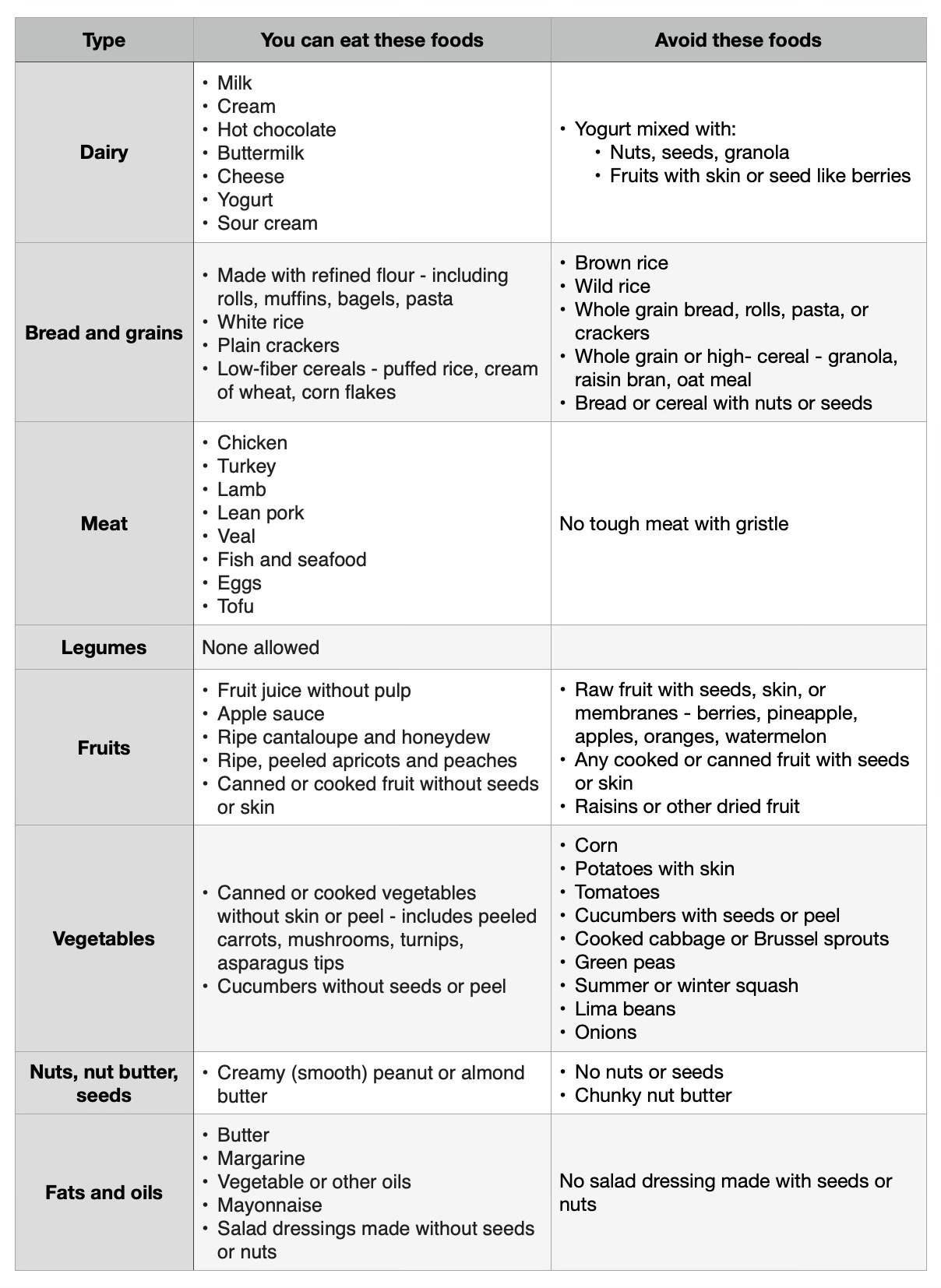
Taken from Kaiser permanente website
Hydration strategies during the prep phase
Drink at least 8 ounces of water for every hour you are awake on the day before your colonoscopy when you start taking the prescribed laxative drink.
Include electrolytes in your drinks.
Tips for making the prep process more comfortable and manageable
Chill your laxative drink and use a straw to make it easier to consume.
Divide the prescribed laxative drink into appropriate doses and drink each dose with sometime in between. Do not gulp it down.
These laxative drinks come in flavors, so choose the flavor you like to make it easier to drink.
Place a menthol candy under your tongue to block the laxative’s taste while drinking. Make sure to choose a candy that is NOT RED, PURPLE, or ORANGE!
Mental preparation strategies to reduce anxiety
Educate yourself
You are already doing this by reading this article. The unknown fuels fear, so understanding the process will make you less anxious.
Talk to your doctor, nurse, or other staff at the clinic; they are there to support you and answer your concerns.
Focus on the benefits
Remind yourself — colonoscopy is powerful procedure for preventing colorectal cancer. This is a proactive, educated step you are taking for your health.
Practice relaxation techniques
Deep breathing exercises or meditation. Many free online resources are available to provide the step-by-step instructions for these exercises and meditation.
Distraction
Engage in activities to take your mind off. Watch movies, read a book, or talk to a friend.
Lean on your support system
Share your feeling with someone you trust. Their emotional support can help you reduce anxiety.
In the next part we will discuss:
What to expect during the procedure?
The recovery process after the colonoscopy
Understanding your colonoscopy results
A Note to Readers…
This content is for educational purposes only. It is not intended to be a substitute for professional medical advice, diagnosis, or treatment. Always seek the advice of your physician or other qualified healthcare provider with any questions you may have regarding a medical condition, treatment options, or health concerns.
See our full medical disclaimer: https://nikithagovula.substack.com/about#§medical-disclaimer
References
Colorectal Cancer Alliance. (n.d.). Screening & prevention. https://colorectalcancer.org/screening-prevention
Cleveland Clinic. (2022, November 30). Colonoscopy. https://my.clevelandclinic.org/health/diagnostics/4949-colonoscopy
Sharma, P., Burke, C. A., Johnson, D. A., & Cash, B. D. (2020). The importance of colonoscopy bowel preparation for the detection of colorectal lesions and colorectal cancer prevention. Endoscopy International Open, 8(5), E673–E683. https://doi.org/10.1055/a-1127-3144
Kaiser Permanente. (n.d.). Clear liquid diet for colon procedures. https://healthy.kaiserpermanente.org/washington/get-care/additional-services/gastroenterology/colon-diet-clear-liquid
Kaiser Permanente. (n.d.). Colonoscopy bowel preparation. https://healthy.kaiserpermanente.org/washington/get-care/additional-services/gastroenterology/colon-prep
MD Anderson Cancer Center. (2025, March 31). How to make colonoscopy prep better. https://www.mdanderson.org/cancerwise/how-to-make-colonoscopy-prep-better.h00-159774867.html
Nuvance Health. (2025, August 26). Anxiety about colonoscopies: Supportive steps for prep. https://www.nuvancehealth.org/health-tips-and-news/anxiety-about-colonoscopies-supportive-steps-for-prep